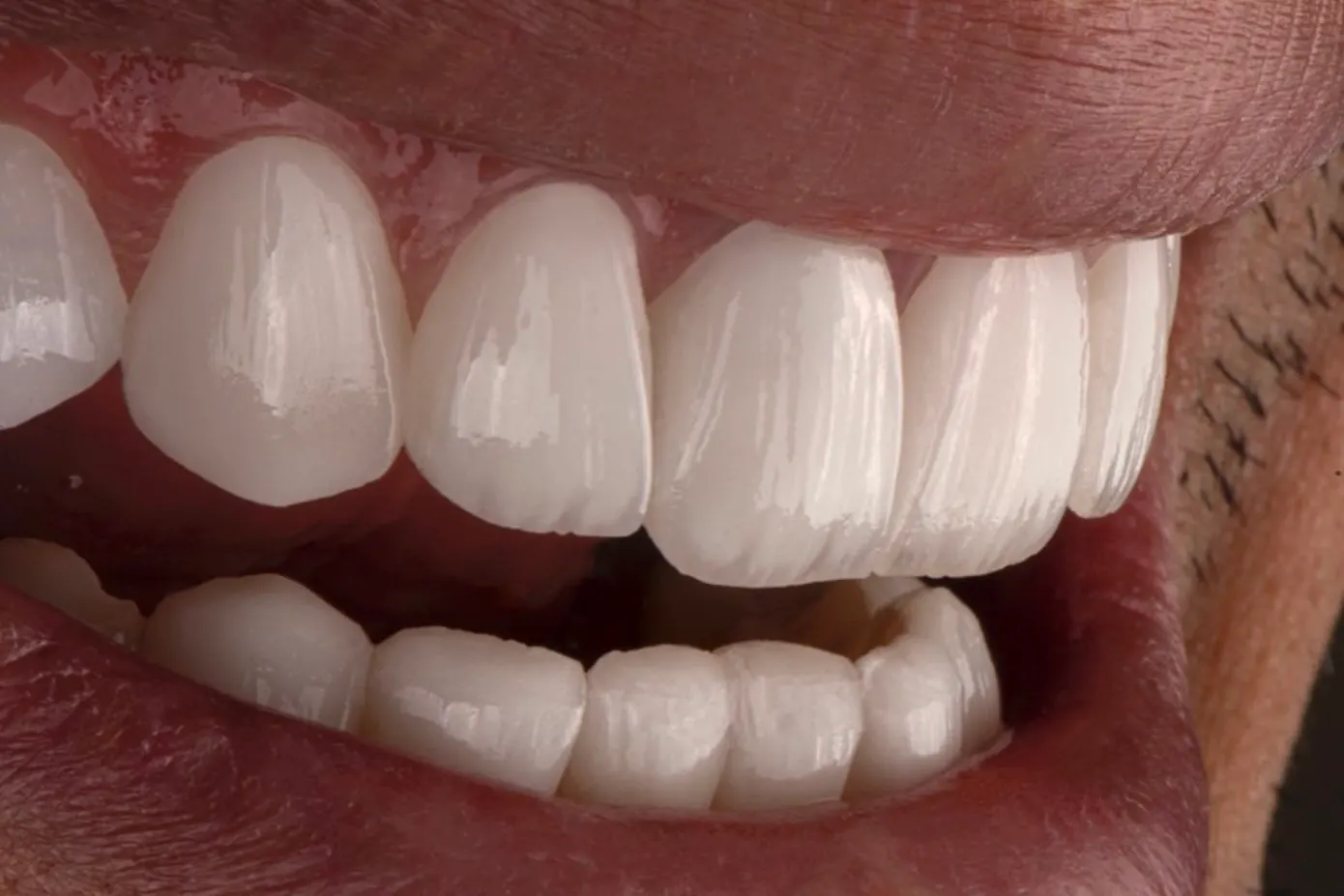
Patients often arrive at my practice in Burke having done some research, and understandably assume that Digital Smile Design and veneers are two competing products they need to choose between.
They are not comparable things, and clearing that up usually makes the whole decision easier.
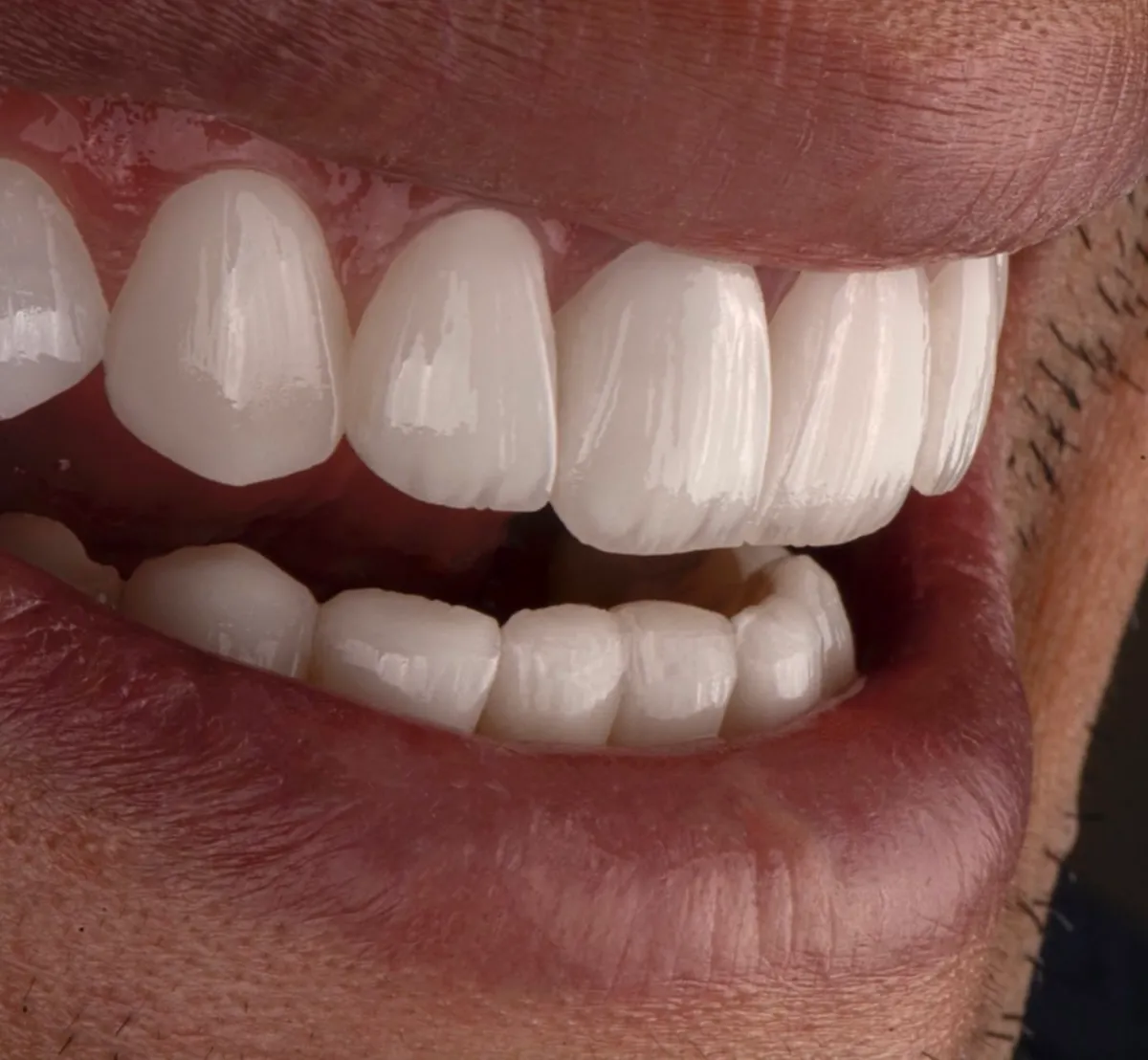
The Short Answer
Digital Smile Design is how the result is planned. Veneers are one of the treatments that might be used to achieve it.
Asking whether to have DSD or veneers is a little like asking whether to have architectural drawings or bricks. One is the design process. The other is a material you might build with, if the design calls for it.
What “Traditional Veneers” Usually Means
In a conventional approach, a patient says they want a better smile, the dentist assesses the teeth, and a plan is proposed: typically porcelain veneers across the visible teeth, in a chosen shade and shape.
Done well, by a skilled clinician with a good ceramist, this produces excellent results, and there is nothing inherently wrong with it. But it carries two structural weaknesses.
First, the plan usually starts from the teeth rather than the face, so the design is decided largely on the basis of tooth shape and shade rather than how the finished smile sits in your features when you speak and laugh.
Second, and more importantly, the patient generally cannot see the outcome in advance. You approve a description and a shade tab, then live with the result. Tooth structure is removed to fit the veneers, and that step cannot be undone.
What Changes With Digital Smile Design
With Digital Smile Design, the sequence runs the other way. We record photographs, video of you speaking and smiling, and a 3D scan. The smile is designed in relation to your facial proportions and lip line. Then, once the design is agreed, we work out what treatment is required to deliver it.
Sometimes the answer is veneers. Sometimes it is not, and that is the part worth paying attention to.
The Conservative Plans DSD Often Reveals
Because the design comes first, we can frequently identify a less invasive route to the same result:
- Alignment instead of coverage. If teeth are principally crooked rather than damaged or discolored, moving them preserves your enamel entirely. Veneers used to disguise misalignment mean removing healthy tooth structure to mask a problem that could have been corrected.
- Whitening rather than porcelain. If shade is the main concern and the teeth are structurally sound, whitening is dramatically less invasive.
- Composite bonding. Our fee for cosmetic bonding ranges from $271 to $499 per tooth, against $1,525 to $1,800 per tooth for porcelain veneers. For smaller corrections, bonding is both more conservative and considerably less expensive.
- Gum recontouring. Sometimes the issue is not the teeth at all but how much gum shows, or an uneven gum line. Our fee ranges from $0 when included with a restoration up to $381 per tooth.
- Fewer veneers. Even when porcelain is right, a design-led plan often shows that six well-designed veneers achieve more than ten indifferent ones.
I labor this point because enamel does not regenerate. Any tooth structure removed is gone permanently, and a veneer commits that tooth to being restored for the rest of its life. A plan that achieves your result while preserving your own teeth is one you will be grateful for in twenty years.
When Are Veneers Genuinely the Right Answer?
Often. They are an excellent treatment when the situation calls for them:
- Teeth that are chipped, worn, or structurally compromised
- Deep intrinsic staining that will not respond to whitening
- Teeth with poor shape or proportion that alignment cannot correct
- Old bonding or restorations that have discolored and need replacing
- Cases where porcelain’s translucency and longevity are the right choice
DSD does not argue against veneers. It establishes whether they are what your particular case needs.
Seeing It Before You Commit
The practical difference most patients care about is this: with a design-led process you can try the result before agreeing to it. The Smile Test Drive places a temporary version of the proposed design over your own teeth, without altering them, so you can see it in a mirror and in your own face.
If it is too bright, too long, or simply not you, we change it while changing it is still easy. That option does not exist once porcelain has been fitted.
What About Cost?
Because every case differs, approved treatment is presented as a case fee that can be phased if that suits you, with no hidden fees. What surprises patients is that a design-led approach is sometimes less expensive overall, because it identifies that fewer teeth need treatment, or that a more conservative material will do.
How Do I Decide?
You do not have to, at least not before the design stage. Come in, let us assess your teeth, gums, and bite, and talk about what you would change. The design will indicate whether veneers are appropriate for your case or whether something more conservative achieves the same thing.
Want to know which route suits your teeth? Schedule a consultation at Sunshine Dentists in Burke, or call (703) 978-1446. You can also read about how Digital Smile Design works or our cosmetic dentistry options.